Islamic World Science and Technology Exchange Office unveiled
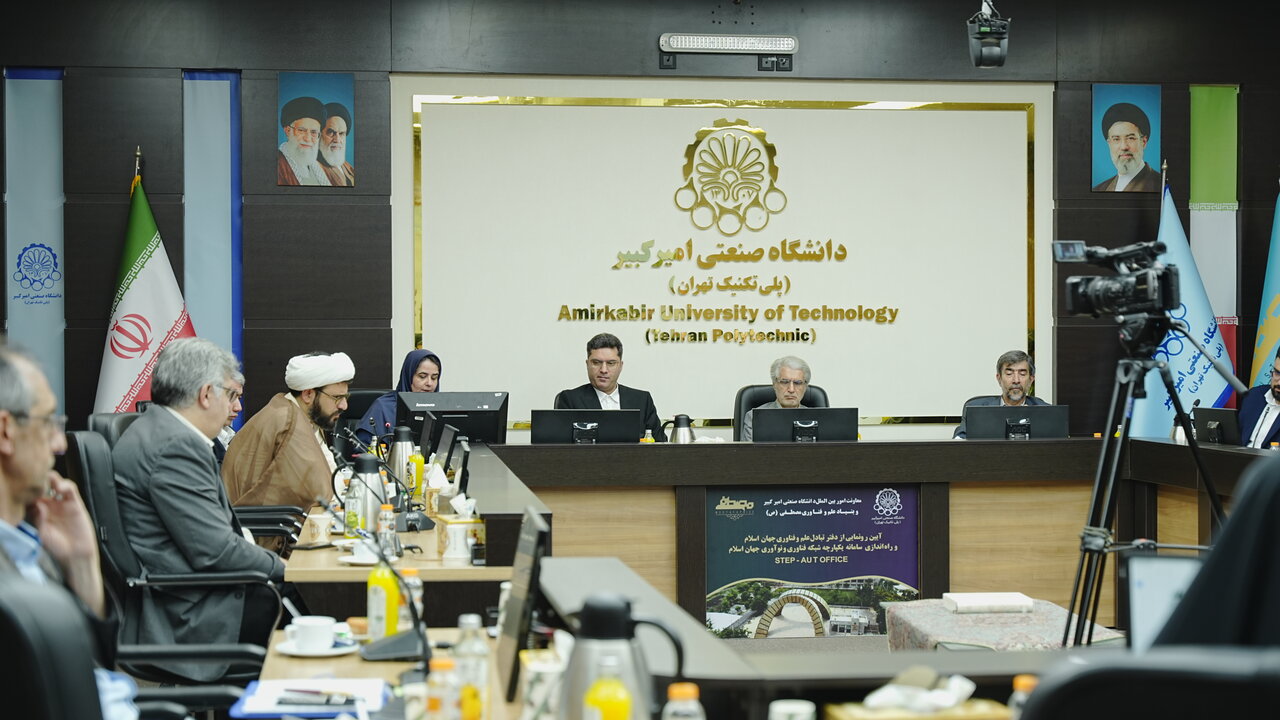
TEHRAN - The Islamic World Science and Technology Exchange Office (STEP-AUT) has been unveiled with the aim of developing and systematizing scientific and technological exchanges, expanding scientific diplomacy, and connecting Iranian researchers with a network of scientists, scholars, and universities across the Islamic world.
The office was launched on Tuesday in cooperation with the Mustafa Science and Technology Foundation and Amirkabir University of Technology. It seeks to transform the scattered scientific capacities across the Islamic world into an active, structured and measurable network, while creating opportunities for academic cooperation, faculty and student exchanges, research opportunities and the implementation of joint projects.
Speaking at the unveiling ceremony, Ali Soroush, president of Amirkabir University of Technology, described the development of scientific ties and networking as a continuation of a deep-rooted tradition in Iranian and Islamic culture.
“Science cannot be confined, and the expansion and dissemination of knowledge have always been part of the scientific and cultural heritage of Iran and the Islamic world,” he said.
Soroush stressed the need to move beyond individual and fragmented contacts toward organized, network-based cooperation, adding that the more structured scientific relations become, the broader their impact and outcomes will be.
He said STEP-AUT could provide a platform for developing sustainable interactions among scientists and universities.
Soroush described international scientific cooperation as a two-way process, emphasizing that Iran and its universities can not only benefit from global experience but also have the capacity to make a significant impact in many scientific and technological fields and move toward achieving greater scientific prominence.
He added that this confidence should be instilled in younger generations of researchers.
Ehsan Qaboul, head of the Ministry of Science’s Center for International Scientific Cooperation, also identified synergy, convergence and networking as key components of scientific diplomacy.
“There is considerable potential for expanding Iran’s scientific and academic cooperation with various countries, particularly those in the Islamic world, stressing that these opportunities should be transformed into sustainable and targeted partnerships.”
Qaboul described the establishment of the Islamic World Science and Technology Exchange Office as an initiative aimed at facilitating and accelerating scientific relations among Muslim countries. Referring to the Mustafa Science and Technology Foundation’s activities in this area, he described the foundation as a source of pride for the country’s scientific diplomacy.
He also stressed the importance of showcasing Iran’s scientific and technological capabilities and achievements and moving away from an “island-based” approach toward the creation of an integrated network.
Emphasizing the need to use data and integrated information systems for decision-making and policymaking, Qaboul said that consolidating the capacities of universities, research institutes and science and technology parks could prevent information fragmentation and strengthen data-driven governance in the field of scientific diplomacy.
Leave a Comment